
Natalie’s autumn garden blog 2026. Birds, bees and butterflies, the enduring presence of perennials, it’s time to plant spring bulbs, Daffodils the first signs of spring, and hedging.

Four seasons in one day — Crowded House
It’s been a summer of twists and turns on the weather front. Summer storms have kept us on our toes. Hurriedly dashing out to our gardens to harvest fruit and veggies, pick flowers and ‘batten down the hatches’. No-one can accuse this summer of being predictable. I am convinced I am becoming a more resilient and adaptable gardener. Truly useful skills to have! At the same time it’s been hard not to enthusiastically embrace the good weather days.
On the plus side our gardens and lawns are lusher than normal, and I’ve spent less time standing on the end of a hose watering. As we head into the autumn months we can look forward to weather that’s traditionally warm and settled. There’s much to enjoy about autumn. Deciduous tress come into their own with wonderful displays of colour, and there are still plenty of flowers and produce to pick. Wander around, and admire your neighbourhood’s gardens. Soak up the seasonal warmth, autumnal flowering and glorious leaf colours. Who needs fireworks!
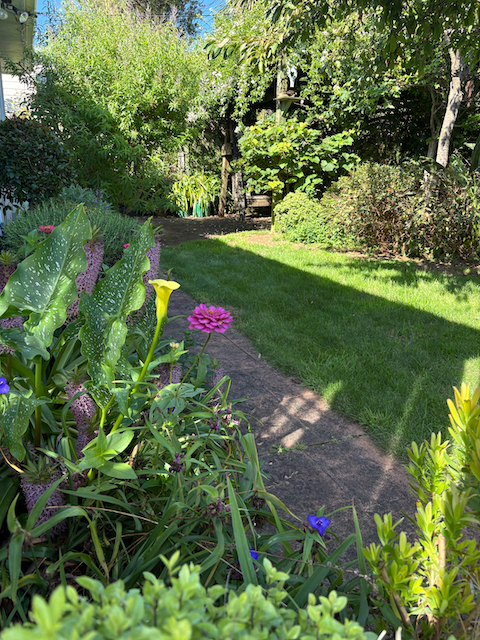
Birds, bees and butterflies
Much like many of us, plants like companions. Marigolds, lavender, geraniums, sunflowers, salvia, borage, verbena, sunflowers, cornflowers, zinnias, bee balm, echinacea, coreopsis and hollyhocks make great companion plants. Brightly coloured flowers also attract birds, bees and butterflies. They’re wonderful pollinators and companions. Plant to encourage birds, bees and butterflies into your garden.

The enduring presence of perennials
Perennials also make wonderful garden companions. They’re plants that die back at the end of their flowering season, and grow back again, usually in the spring. Perennial gardens often conjure up images of charming english cottage gardens. Most perennials are easy maintenance, and easy to divide and propagate, making them cost-effective plants. They also tend to be colourful, are great as picked flowers, help to keep weeds at bay, while helping to attract birds, bees and butterflies.
There seems to be a resurgence of interest in perennials which I’m really pleased about. I find them pleasantly undemanding, and unless they’ve outgrown their space and need dividing I can pretty much ignore them. On the odd occasion I forget about them, only to be pleasantly reminded they exist when they pop up again in spring and summer. Next time you’re looking to fill a gap don’t forget to look out for perennials. If you do a little research you’re likely to stumble across an unusual perennial which will add interest and diversity to your garden.
It’s time to plant spring bulbs
It’s an excellent time to plant spring bulbs. It always seems too early to think about planting spring bulbs now but it’s definitely not. If you’re looking to add to your range of spring flowering bulbs think about colours. Bulbs look wonderful planted out in colour themes.
There’s an amassing colour palette to choose from. What colour or colours take your fancy? Dreamy blues, cheerful reds, pristine whites or a glorious gold and yellow bonanza?
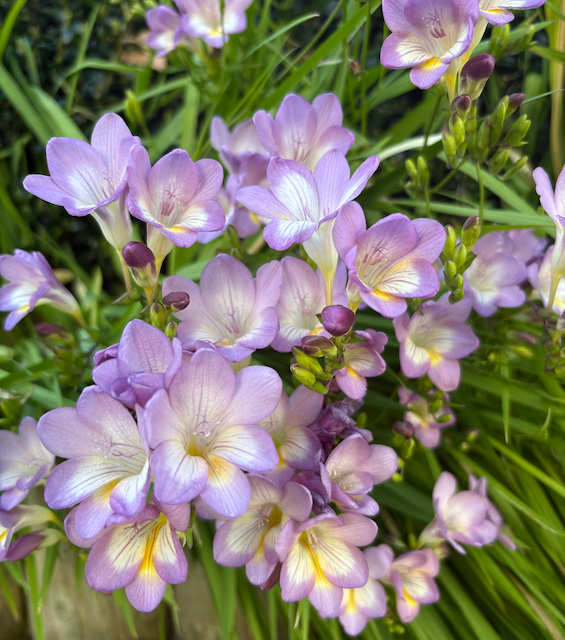
Bulbs like sun but will also grow in partial shade. They thrive in well-draining soil, and as a rule of thumb plant bulbs around 10cm deep. Water them in if the soil is dry, and there’s no need to worry about fertiliser until you spot flower buds in early spring.
Daffodils the first signs of spring
In late spring, after the leaves had died down, I lifted my Daffodil (Narcissus) bulbs this year. I’ve found that lifting them every four or five years reduces over-crowding and encourages stronger and more prolific flowering. Naturalising bulbs (ones that don’t need to be lifted to ensure flowering) were not exempted from the ‘uplifting’. Even they seem to benefit from being divided up. I also like to spread their bright spring colour around the garden, and gift bulbs surplus to my requirements to fellow gardeners. They’ve dried out well over the summer months and before planting, I rub off the dry skins and remove any that have been damaged, are dry and shrivelled, or soft and spongy.
Above: Daffodil bulbs ready for planting out and A cheery, double flowering Daffodil
Bulbs like sun but will also grow in partial shade. They thrive in well-draining soil, and as a rule of thumb plant bulbs around 10cm deep. Water them in if the soil is dry and there’s no need to worry about fertiliser until you spot flower buds in early spring.
Fun facts about Daffodils (Narcissus)
The word Narcissus comes from Greek mythology, and is about a young man who as he bent down to drink, fell in love with his reflection
The ancient Greeks, Egyptians and Romans first grew daffodils
Daffodils symbolise rebirth and new beginnings. Many cancer charities use the daffodil as a symbol of hope.
Daffodils are the national flower of Wales
Daffodils along with Jonquils are the birth flower for March
Daffodils don’t mix well with other flowers in the vase, as they release a toxic sap when cut
Over 13,000 varieties of daffodils are now registered
Daffodils don’t just come in yellow, but also white, orange and pink
William Wordsworth’s famous poem “I wandered lonely as a cloud” was inspired by Daffodils
Van Gogh painted daffodils in several of his works
The popularity of daffodils exploded when the Dutch began growing them.
Hedges
Formal or more casual?
When we thinking of hedging we tend to think formal. It’s true that hedges can formally define different parts of the garden, and add wonderful structure but they can also add what I call casual structure. A mixture of shrubs of a similar height can lead your gaze or encourage you to wander down a garden, to see what there is around the corner, or at the end of the garden. Their height and planting out as edging shrubs adds a more casual structure compared with more formal hedging. They respond well to a light trim to keep them bushy but don’t need regular, more precision-like trimming. You can also introduce complementary foliage and colour between different plant species, or within the same species. The Corokia species is a good example where you can select one or two varieties for their coloured foliage and then alternate planting for contrast. A mixture of green and bronze varieties has worked well for me, and can add real interest. Hedges can be lower growing, or grow up to one, two or even three metres high. It all depends on how much shelter or privacy you need, and can be dictated by the size of your garden.
One thing I’ve noticed this summer is that my lower growing hedges have provided shelter from the summer storms but also a micro-climate. My aubergines have flourished and fruited prolifically inside hedging, much more so than those with less protection. If you do get captured by hedging I have some advice. Battery hedge trimmers make life much easier, and secondly if you trim your hedges regularly it’s much easier to ‘chop and drop’ the foliage straight back onto the garden as a mulch. We all know you can never mulch too much on sandy soil! To get you started I’ve listed some hedge plants, and referred to the species (spp) and not the varieties. Each species has many varieties and I recommend browsing around your local garden centre or nursery, and noticing which colours, textures and form catch your attention.
Eye-catching hedge plants
Lower growing:
Lonicera nitida
Buxus
Coprosma spp
Lavender
Rosemary
Smaller growing pittosporum spp
Taller growing:
Hornbeam
Camellia sasanqua
Portugese laurel
Pittosporum tenufolium spp
Irish yew
Silver germander
Grewia occidentalis
Griselinia littoralis
Golden Totara
Corokla spp.
Pleached hedging
Pleached hedging is when the trunks of trees are exposed and the foliage above is hedged. Pleaching can add height to an existing fence while providing good light and allowing rainfall for smaller growing shrubs, flowers and perennials underneath. I’ve espaliered some Monty’s Surprise apples under my pleached olive trees, which is a really good option if you’re short on space. Some trees show pleaching off to good effect and three that leap to mind are Olive, Hornbeam and Portugese laurel.

Gardening gems
Pick up, prune and dispose of any diseased fruit, foliage and twigs that have fallen to the ground
Plant spring bulbs now. Favourites include:
Freesia, Muscari, Amarylis, Anemones, Ranunculus, Irises, Daffodils and Tulips.
Keep deadheading to encourage new flowers. The weather may be cooling a little but there are plenty of flowers still to come.
Harvest fruit and vegetables regularly. The birds do not need to eat everything!
Feed plants to help rejuvenate and encourage growth ahead of the cooler months, and a slow down in growth
Plant out winter veggie and flowering seedlings
Trim and establish new hedging
Keep on top of weeds
Now is a good time to divide, move and introduce new plants to your garden.
It’s a great time of year to explore, and enjoy your garden. Autumn delivers us with ideal gardening conditions. The weather’s not as hot, and the soil is invitingly damp and warm for new plantings. Have you discovered any gaps that could be filled with something new? Planting now gives them plenty of time to establish roots ahead of winter. Don’t forget to take some time to think carefully about what you’re planting, and where. Every now and again plants like to remind us they can be temperamental. Look to see if any plants aren’t looking happy and shift them to a more suitable spot. And finally, as you harvest fruit and veggies, and pick flowers for a vase, take a moment to remember that this is the joy of gardening.
Happy gardening!
Natalie Quirke
Garden designer
Dip Hort, Dip Hort Mgt, NDH

Comments